Skip to content



Clothes that dried in one cycle all summer suddenly come out damp, and you catch yourself running the dryer a second time once the first hard cold hits. That is annoying, and it raises a fair worry: is this just the weather, or is a blocked vent trapping heat where it could overheat? The answer usually points to one spot, and it is one you can often check from the ground in a couple of minutes.
In most cases, the cause sits at the outside vent cap. The damper flap has iced shut, snow has drifted against it, or lint in the run has absorbed moisture and frozen into a plug. Moist exhaust cannot escape, so it stays in the drum and clothes take two or more cycles. You can safely inspect a ground-level cap from outside, but a hot dryer cabinet means stop using it until the vent is clear.
Why Is My Dryer Taking Longer in Winter?
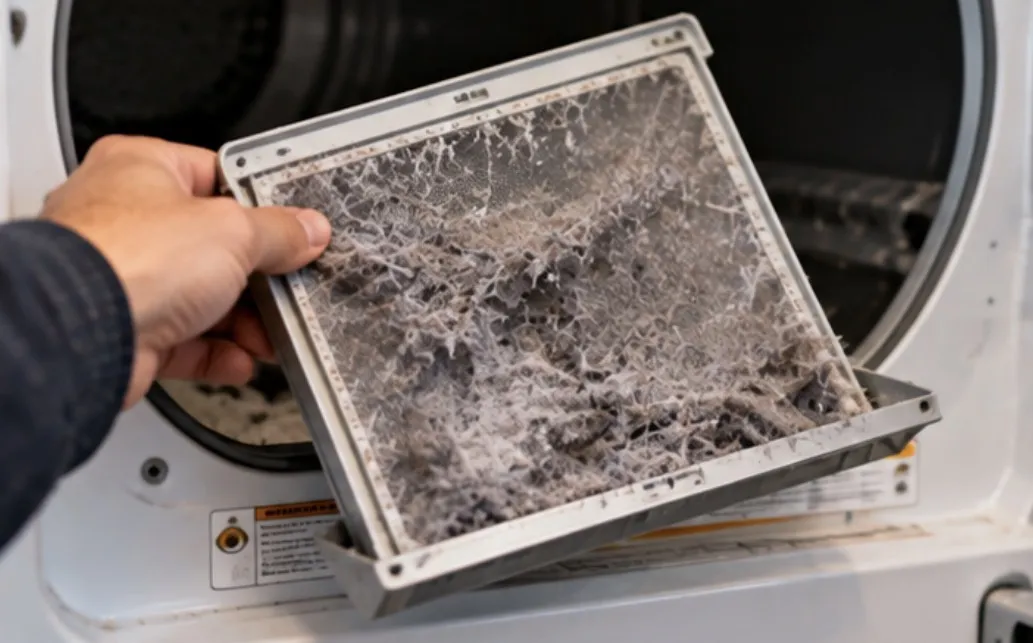
Slow winter drying usually means the outside vent cap is iced over, snow-blocked, or plugged with lint that has frozen solid. The dryer is doing its job inside; the exhaust just has nowhere to go. When that warm, wet air cannot leave, it circles back into the drum, and a load that used to dry in one cycle now needs two.
The timing is the giveaway. A frozen cap usually shows up in the first hard cold weeks of winter, often overnight, when the temperature drops far enough to freeze the moisture sitting on the vent flap after your last load.
A few slowdowns have nothing to do with the vent. A dryer sitting in an unheated garage pulls in cold air and takes longer to heat up, and winter loads of towels, sweatshirts and flannel sheets simply hold more water. Those are worth ruling out, but if the slowdown arrived with the first freeze, start at the vent. Late fall, before the cold sets in for good, is a sensible time to look at it, and the next sections explain what freezes and how to tell which blockage you have.
Why Does Cold Weather Make a Dryer Take Longer?
A dryer pushes hot, moisture-laden air out through a vent run to a cap outside. In summer that air exits warm and leaves. In winter, the metal run and the cap sit in freezing air, so the moisture in that exhaust condenses as it travels and collects at the coldest point, which is the cap itself.
Once water pools on the damper flap and the overnight temperature falls, it freezes. According to Weather Spark, local overnight temperatures through the cold months regularly fall well below freezing and dip toward single digits during cold snaps. That is more than cold enough to ice a damp cap shut overnight.
So the dryer is not weaker in winter. The exit is. A single cold night can freeze a flap that worked fine the afternoon before, which is why the problem often appears the morning after the first hard freeze. Knowing it is the exit, not the machine, tells you where to look, and the blockage comes in a few recognizable forms.
What Actually Blocks the Vent in Winter?
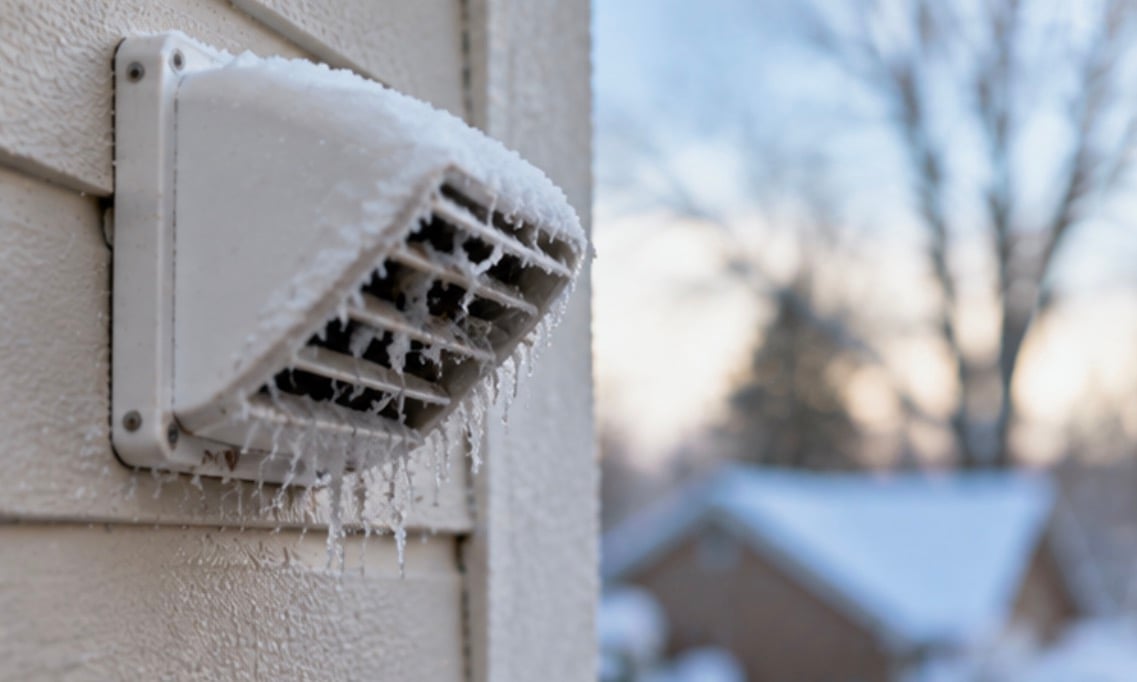
Winter blockages come in four common forms, and each leaves a different clue. Knowing which one you have tells you whether it is a two-minute fix at the cap or a job for the full run.
A Damper Flap Frozen Shut
The cap has a hinged flap that opens on airflow and falls closed when the dryer stops. Moisture left on that flap freezes it to the housing overnight. The tell is timing: the dryer struggles first thing in the morning and improves as the day warms. You may see the flap stuck partly open or crusted with ice at the hinge.
A Snow Drift Against the Cap
A cap mounted low on a wall can get buried when snow piles up or drifts against the house. The flap is fine; it simply cannot push past packed snow. The tell is obvious once you look: a wall of snow against the vent and clothes that dry normally again the moment you clear it away.
Lint That Has Absorbed Moisture and Iced Over
Lint already coating the vent run soaks up condensing moisture and freezes into a dense plug, usually near the cold cap. This one does not thaw with the afternoon sun because the lint holds water against the cold metal. The tell is a slow dryer that stays slow even on milder days, which points past the weather to lint buildup.
A Vent Run Through a Cold Garage or Attic
Many metro homes route the vent through an unheated garage or attic. Air cools along that cold stretch, drops its moisture early, and feeds the ice-plus-lint plug well before the cap. The tell is recurring freeze-ups even after you clear the cap, because the actual cold spot is inside the run where you cannot see it.
| Winter blockage | What you notice | Why it happens |
|---|---|---|
| Frozen damper flap | Slow mornings, fine afternoons | Moisture on the flap freezes overnight |
| Snow drift against cap | Sudden slowdown after snow | Packed snow blocks the flap from opening |
| Iced lint plug | Slow even on mild days | Lint holds moisture and freezes near the cap |
| Cold garage or attic run | Repeats after clearing the cap | Air cools mid-run and drops water early |
Matching your symptom to one of these tells you whether you are looking at a quick clear or a buildup that needs reaching. Next is what you can safely do yourself.
What Can You Safely Check Yourself?
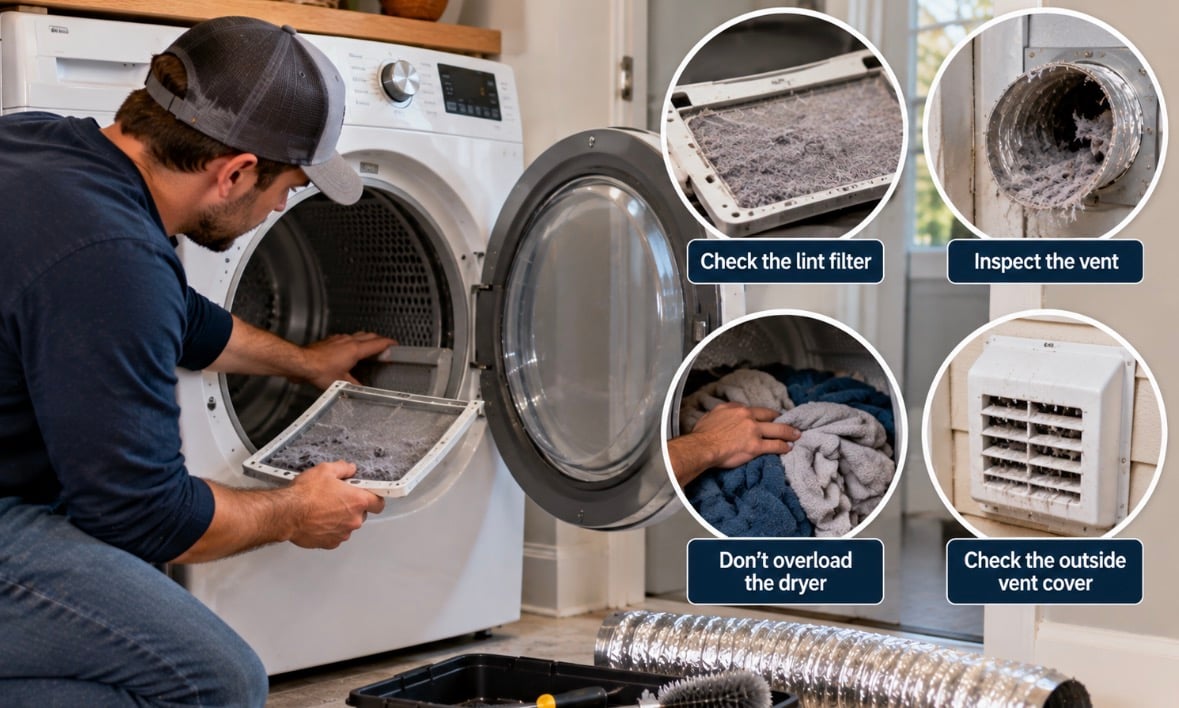
Most of the safe checks happen outside, at a cap you can reach from the ground, with nothing more than your hands and your eyes. You are looking for snow, ice, or a flap that will not open, and you are confirming whether the dryer itself is running too hot.
Here is what you can do without tools or risk:
- Find the exterior cap: Locate where the vent exits the wall and look at it from the ground while a load runs.
- Check for airflow: Hold your hand near the cap during a cycle to feel whether warm air is actually coming out.
- Clear drifted snow: Brush away any snow packed against a low cap so the flap can open freely.
- Free a stuck flap: On a ground-level cap only, gently work an iced flap loose or thaw it with a little warm water, then wipe it dry so it does not refreeze.
- Clean the lint screen: A screen coated in lint slows every load, winter or not, and takes seconds to clear.
- Check the hose behind the dryer: Look for a kinked or crushed flexible duct where the dryer has been pushed back against the wall.
- Feel the dryer cabinet: If the cabinet or clothes are too hot to touch comfortably, stop the dryer and leave it off.
The hot-cabinet rule is the one that matters most. Trapped exhaust means heat and flammable lint have nowhere to go, so a cabinet too hot to touch is your signal to stop rather than push through another cycle.
A gas dryer adds a second risk. When the vent is blocked, combustion exhaust, including carbon monoxide, can back up into the laundry room. Keep a working CO alarm nearby, and if it sounds or anyone feels headachy or dizzy, turn the dryer off, get everyone outside and call 911 or your gas utility from there.
If clearing the cap does not fix it, the right next move is a professional look at the full run, not another hot cycle. What you should leave alone is anything you cannot reach safely from the ground, which is where rooftop vents come in.
Why Are Rooftop and Townhome Vents a Special Case?
If your vent runs up through the roof, the answer changes from check-it-yourself to call someone. Some townhomes and condos route the dryer vent through the roof instead of out a side wall, which puts the cap well out of a homeowner’s safe reach, especially when the roof is iced or snow-covered.
A rooftop cap freezes and plugs the same way a wall cap does, but you cannot inspect it, brush off snow, or thaw a flap without getting on a roof in winter. That is not a job to improvise.
A fall from an icy roof is a far worse outcome than a few extra drying cycles, and poking a long pole up a vent you cannot see risks packing the lint tighter.
So for a rooftop vent, the safe self-check stops at the dryer itself. Feel the cabinet for excess heat and watch the drying times, but leave the cap to someone with the equipment to reach it. Whether your vent is on the roof or the wall, there is a point where this stops being a DIY fix.
When Is a Slow Dryer a Job for a Professional?
Some signs mean the problem has gone past what the weather explains. A burning smell is the clearest one: turn the dryer off and leave it off until the vent is checked. The other dryer vent warning signs to watch for this time of year:
- The cap is clear but drying is still slow: A clean cap with a slow dryer points to buildup deeper in the run.
- The cabinet runs hot: Excess heat means exhaust is still trapped somewhere you cannot see.
- It refreezes within days: Repeated freeze-ups suggest a cold run or lint holding moisture, not a one-off icing.
- You see lint packed in the duct: Visible buildup at the connection means the whole run likely needs clearing.
- The run goes through a roof or long cold space: Reaching it safely takes equipment you probably do not have.
- A CO alarm sounds near a gas dryer: Get everyone outside and call 911 or your gas utility before anything else.
If the outside cap looks clear but clothes still need two cycles, have the full run inspected before assuming it is only the weather. Iced lint builds on a buildup that was already there, so the freeze often just exposes a vent that was overdue. A dryer vent should be inspected roughly once a year, and more often with heavy use or pets.
A professional dryer vent cleaning clears the full run with rotary brushes and high-powered vacuums, not just the cap. That reaches the lint behind an iced plug, which is exactly the part a homeowner cannot get to. Clearing the cap buys you time; clearing the run is what keeps it from happening again.
Why Choose Fresh Air First for Dryer Vent Cleaning?
Fresh Air First is an owner-operated duct and dryer vent cleaning company based in Northglenn, with a 4.9-star rating across more than 200 Google reviews. We photograph your vent before we start and again when we finish, so you can see the lint that came out instead of taking our word for it.
For a slow winter dryer, we clean the whole run, from the connection behind the dryer to the cap outside, including stretches through cold garages and attics. Dryer vent cleaning starts at $99, depending on the length, access and layout of your vent, and it may be included at no extra charge with a qualifying full-system deep cleaning.
Not sure what your vent needs? The in-home inspection is free, and you get the exact price before any work begins. Ask about our current offers, including discounts for seniors and military, when you call (720) 740-0836 or send us a message.
Frequently Asked Questions
Is a frozen dryer vent a fire hazard?
It can be. A blocked vent traps hot, lint-laden air, and lint is flammable. If the cabinet runs hot or clothes come out very hot, stop using the dryer until the vent is cleared. The risk rises the longer you keep running a dryer that cannot exhaust properly.
Can I pour hot water on a frozen dryer vent cap?
Only on a cap you can reach from the ground, and sparingly. Hot water can free an iced flap, but in a hard freeze it refreezes fast, so treat it as a short-term fix rather than a repair. If it keeps icing, the run needs attention. Never attempt this on a rooftop cap.
Why does my dryer only struggle in the morning?
Overnight cold freezes the moisture left on the damper flap after your last load, so the first cycle of the day fights a frozen exit. By afternoon it may thaw and work fine. That daily pattern is a strong sign the cap, not the dryer itself, is the problem.
How do I know if it is the vent or the dryer itself?
If drying improves once you clear the outside cap or the day warms, the vent is the cause. If the dryer stays slow regardless of temperature and the cap is clear, the heating element or internal airflow may be failing, which is a repair for the appliance rather than the vent.
Can a blocked dryer vent cause carbon monoxide?
It can with a gas dryer. Gas dryers burn fuel, and the vent carries that combustion exhaust outside. When the vent is blocked, carbon monoxide can back up into the laundry room. Electric dryers do not produce CO. If you have a gas dryer, keep a working CO alarm nearby and stop using the dryer until a blocked vent is cleared.