Skip to content
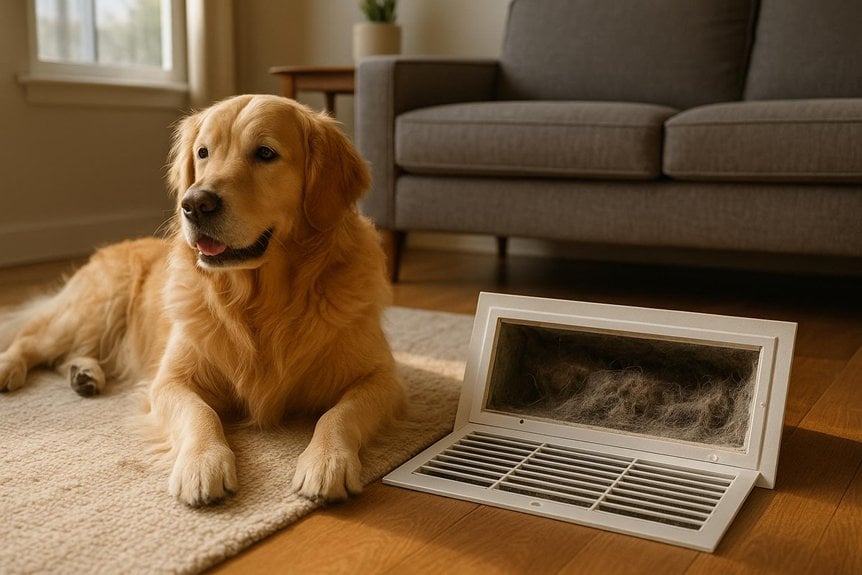
If you share your home with pets, you’ve probably noticed how fur and dander seem to travel everywhere—including your HVAC duct system. Dogs and cats with heavy or seasonal shedding coats can release large amounts of hair and microscopic dander that easily become airborne. When your furnace or air conditioner runs, these particles are pulled through return vents and begin circulating through the ductwork.
Over time, this buildup can affect indoor air quality, airflow, and dust levels inside your home. That’s why many homeowners with pets wonder how often they should actually clean their air ducts. The answer depends on factors like the number of pets, shedding level, and how your HVAC system operates throughout the year.
Why Pet Owners Experience Faster Duct Dust Buildup

Homes with pets tend to accumulate dust inside their HVAC duct systems much faster than homes without animals. Dogs and cats naturally shed hair and release microscopic pet dander every day. As pets move around the house—jumping on furniture, running across floors, or resting near vents—loose hair and dander easily become airborne. When your furnace or air conditioner runs, that airborne debris is pulled into the system through return vents and begins circulating through the ductwork.
Over time, these particles settle along the inside surfaces of supply and return ducts, mixing with normal household dust and debris. In many Colorado homes, technicians often find pet hair buildup inside ductwork during inspections. Because pets shed continuously, this debris can accumulate much faster than most homeowners expect, which is why air duct cleaning may be needed more frequently in homes with pets.
Several common factors contribute to faster dust buildup in homes with pets:
- Daily pet shedding — Dogs and cats constantly release fur and dander into the air.
- Air circulation from HVAC systems — Heating and cooling cycles pull airborne debris into the duct system.
- Pet activity indoors — Running, playing, and grooming spread loose fur throughout the home.
- Return vents near floors — Pet hair often collects on floors where many return vents are located.
- Dry Colorado indoor air — Homes along the Front Range tend to have dry air that allows dust and dander to stay airborne longer.
Because of these conditions, homes with pets usually experience heavier debris accumulation inside ductwork compared to homes without animals.
Where Pet Hair and Dander Usually Collect Inside HVAC Systems
Once pet hair and dander enter your HVAC system, they rarely stay in one place. As air circulates through the duct network, these particles gradually settle in different parts of the system where airflow slows down or changes direction. In homes across Northglenn and the Denver metro area, technicians commonly find pet hair buildup during duct inspections in several key areas.
Some of the most common places where pet debris collects include:
- Return air ducts — These vents pull air from rooms back into the HVAC system, often capturing pet hair from floors and carpets.
- Blower compartments — The blower fan can collect fur and dust that circulate through the system.
- Duct elbows and corners — Airflow slows in these areas, allowing hair and dust to settle.
- Vent registers and grilles — Pet hair often gathers near vents where air enters or exits the system.
- Air filters — Filters trap airborne pet hair and dander before it moves deeper into the ductwork.
Over time, this buildup can restrict airflow and allow allergens to circulate through the home. That’s why understanding how often pet owners should clean their air ducts becomes important for maintaining both indoor air quality and HVAC performance.
How Often Air Duct Cleaning Is Recommended for Homes With Dogs or Cats

Most homes do not require frequent duct cleaning, but households with pets often need it sooner because pet hair and dander circulate through the HVAC system every day. As your furnace or air conditioner pulls air through return vents, loose fur, dust, and microscopic dander particles gradually settle inside the duct network.
Over time, this buildup can affect airflow and indoor air quality, especially in homes with multiple pets or heavy-shedding breeds. While the exact cleaning schedule varies depending on the number of pets, shedding levels, and overall home cleanliness, the following guideline can help you estimate how often professional air duct cleaning may be beneficial.
| Household Type | Recommended Cleaning Frequency |
|---|---|
| No pets | Every 5–7 years |
| One small pet | Every 4–5 years |
| Multiple pets | Every 3–4 years |
| Heavy shedding breeds | Every 2–3 years |
Industry organizations like the National Air Duct Cleaners Association (NADCA) recommend cleaning duct systems when visible debris, airflow restrictions, or indoor air quality concerns are present. Regular cleaning keeps your indoor air healthier and your equipment running efficiently. Indoor air quality testing can help identify hidden pollutants that may accumulate more quickly in homes with pets, ensuring you know when a thorough duct cleaning is needed.
Even if you follow general cleaning guidelines, the condition of your ductwork often becomes noticeable through changes in airflow, dust levels, and indoor air quality.
Signs Pet Hair and Dander Are Building Up Inside Your Air Duct System
When you have pets at home, some hair and dander circulating through the house is expected. However, when these particles begin collecting inside your HVAC duct system, homeowners usually start noticing changes in airflow, indoor air quality, and dust levels. In many homes across Northglenn, CO, technicians often discover significant pet hair buildup inside return ducts and blower compartments once these warning signs appear.
If you’re seeing any of the following symptoms, it may indicate that pet hair and dander are accumulating inside your ductwork:
- Pet Hair Around Vents — Fur gathers around supply registers or return grilles even after regular cleaning.
- Dust Returning Quickly — Surfaces become dusty again shortly after vacuuming or wiping them down.
- Pet Odors From Vents — Musty or “doggy” smells circulate through the home when the HVAC system runs.
- Weak Airflow From Some Vents — Debris buildup inside ducts can restrict airflow to certain rooms.
- Clogged HVAC Filters — Filters fill with pet hair and dust much faster than usual.
- Worsening Allergy Symptoms — Sneezing, itchy eyes, or congestion increase as pet dander circulates through the air.
When several of these signs appear together, it often means debris has built up deeper inside the air duct network, where normal household cleaning cannot reach. In these cases, professional air duct cleaning can help remove pet hair and dander from the system, improving both airflow and indoor air quality throughout your home.
How Pet-Related Duct Contamination Affects Indoor Air Quality and Airflow

When pet hair and dander accumulate inside ductwork, they can gradually affect both indoor air quality and HVAC airflow performance. Each time your furnace or air conditioner runs, air passes through the duct network and can carry these particles back into living spaces.
Common effects homeowners notice include:
- Hair buildup inside ducts — Pet fur sticks to dust along duct walls and return vents.
- Dander circulating through vents — Microscopic allergens spread through heating and cooling cycles.
- Restricted airflow — Debris buildup narrows duct passages and reduces air delivery to certain rooms.
- Increased indoor dust — Contaminants circulate through the home more frequently.
- Persistent pet odors — Odors trapped inside ductwork may spread when the HVAC system operates.
Over time, this contamination can reduce HVAC efficiency and worsen indoor air quality, particularly in homes with multiple pets or heavy-shedding breeds. As debris collects inside ductwork, it can gradually affect airflow and allow allergens to circulate through the home. While professional cleaning removes buildup deep inside the system, you can still take a few practical steps to limit how much pet hair and dander enters the ductwork in the first place.
Simple Maintenance Steps Pet Owners Can Take Between Professional Duct Cleanings
Because pet hair and dander can gradually build up inside HVAC ductwork, small maintenance habits can help reduce how much debris enters the system between professional cleanings. While these steps won’t remove contamination already deep inside the duct network, they can slow down buildup and help maintain healthier airflow throughout your home.
Simple maintenance habits pet owners can follow include:
- Vacuum around return vents weekly to prevent pet hair from being pulled into the HVAC system.
- Replace HVAC air filters every 30–60 days to capture pet dander and airborne debris.
- Brush pets regularly to reduce the amount of loose fur circulating through your home.
- Wipe down vent covers and registers to remove dust before it enters the airflow system.
- Keep return vents unobstructed so airflow is not restricted by furniture or pet beds.
These simple DIY steps can help limit how quickly pet debris accumulates inside ductwork. However, when buildup begins affecting airflow or indoor air quality, scheduling professional air duct cleaning is often the most effective way to restore proper system performance.
Why Choose Fresh Air First in Northglenn, CO for Professional Air Duct Cleaning

If pet hair, dander, and dust are starting to affect the air inside your home, working with a trusted local specialist can make a noticeable difference. At Fresh Air First, we provide professional air duct cleaning in Northglenn designed to remove pet hair, dust buildup, and allergens from the duct system. Our technicians understand how Colorado’s dry climate, heavy furnace use, and pet activity can cause debris to accumulate inside HVAC ductwork over time.
In addition to complete residential duct cleaning services, we also offer specialized HVAC filters designed for homes with pets, helping capture airborne fur and dander before they circulate through your system. If you’re noticing increased dust, pet odors, or weak airflow in certain rooms, scheduling a professional inspection with Fresh Air First can help restore cleaner air and healthier airflow throughout your home.