Skip to content

Plan on cleaning your furnace at least once a year, ideally in early fall before the heating season starts. In Colorado, with a long heating season and dry, dusty air, once a year is the minimum, not a target to stretch. Homes with pets, recent remodeling, or heavy use often need it sooner.
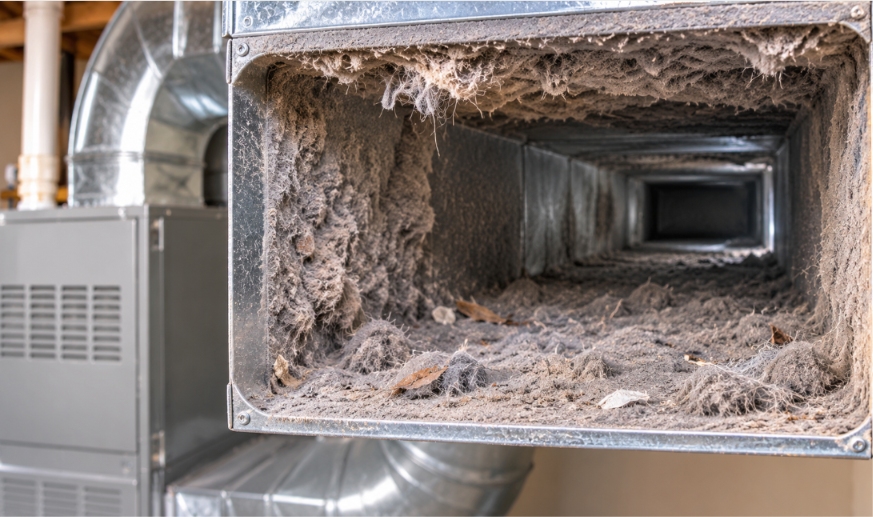
Skip it, and dust builds up on the blower wheel. You start to notice weak airflow, rooms that never quite warm up, or a furnace that turns on and off more than it should. By then, a caked blower has been making the furnace work harder for months, and that strain shortens its life. A real cleaning means opening up the blower, not swapping the filter and calling it done.
How Often Should a Furnace Be Cleaned in Colorado?
Plan on at least once a year, scheduled before the heating season begins. Every heating cycle pulls household dust across the blower wheel and through the cabinet. ENERGY STAR recommends a heating checkup every fall, and a yearly cleaning gives you a clean start each winter.
A broader way to think about it is a checkup twice a year, furnace before winter and air conditioner before summer. Long winters and hot summers put hours on the same blower, and splitting the work across two visits catches small problems before a cold snap turns them into a no-heat call. That said, the right interval depends on how your specific system runs, not on the calendar alone.
One habit saves you money here: ask to see what is actually inside the blower before you pay for a cleaning. Before-and-after photos or a quick borescope look tell you whether you are buying the work the furnace needs or a scheduled upsell. A dirty system often shows up at the thermostat first, as short-cycling and uneven room temperatures.
Why Does Colorado Make Furnace Cleaning Matter More?
Yes, the local climate changes the math. Colorado’s heating season runs long, about seven months, roughly October through April, with freezing nights arriving in fall and lingering well into spring. More months of runtime means more hours of the blower pulling household air across its wheel and more combustion cycles firing the burners.
Dry Front Range air adds to it. Wind carries fine dust into homes, and low humidity makes it easier for that dust to get stirred back into the air. More of it ends up at the return, where it settles on the blower and coil.
Put those two together and you get a furnace that works harder, for longer, in dustier air than most of the country sees. That is why the annual interval reads as a minimum here. Skipping a year lets buildup accumulate across two full heating seasons, which is exactly when efficiency losses and airflow complaints start to show.
What Makes a Furnace Need Cleaning More Often?
Some homes load a furnace faster than normal living does. Pet dander and shed hair, heavy daily use through a long cold stretch, and a filter that nobody has changed all point toward a shorter interval. According to a Carrier furnace cleaning guide, homes with pets or high dust levels may need more frequent attention to protect air quality and furnace lifespan.
Renovation is the big one in this market. The metro’s steady new construction and remodeling pushes fine drywall dust and sawdust into return air for months, and that superfine grit coats a blower wheel and clings to a coil far faster than ordinary dust. These factors can push you toward cleaning more frequently than annually:
- Pets in the home: Dander and hair load the blower and filter well ahead of schedule.
- Recent remodeling: Drywall and sawdust coat internal parts within weeks, not seasons.
- Heavy winter runtime: More cycles mean more dust pulled through and more combustion residue.
- Neglected filters: A clogged filter lets dust bypass into the blower compartment.
- Smokers or wood burning: Fine particulate settles on components faster than normal.
Match your own home against that list. If two or three apply, treat the annual schedule as a starting point and expect to clean sooner, especially in the year after any construction work.
What Does a Real Furnace Cleaning Include?
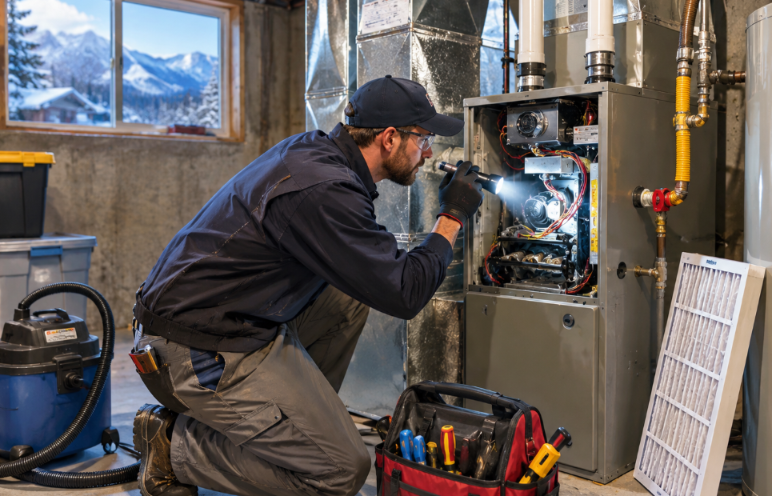
A professional furnace cleaning should go beyond wiping the cabinet or replacing the air filter. It should address the components that collect dust, affect airflow, and support safe burner operation. The technician should also check how the system performs after cleaning to confirm that the work has made a difference.
Cleaning the Blower Assembly
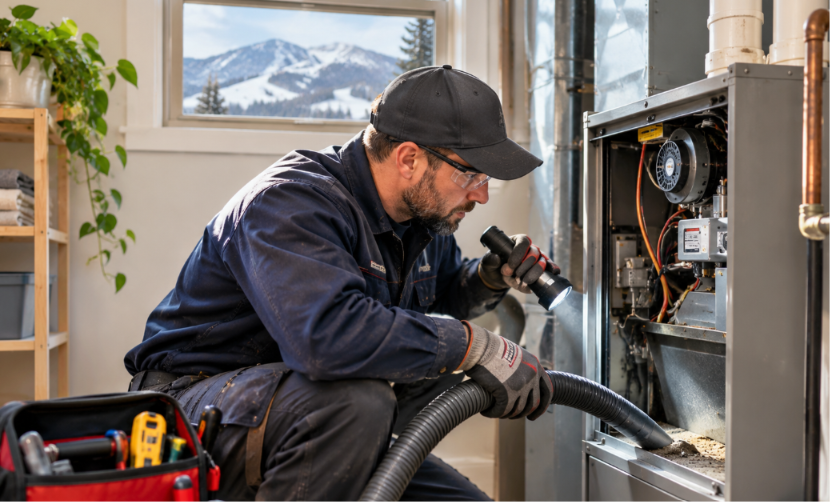
The blower assembly moves heated air through your home’s ductwork. Over time, dust and debris can collect on the blower wheel blades, restricting airflow and making the motor work harder. A thorough cleaning includes accessing the blower assembly, removing accumulated buildup, and checking the wheel and motor for visible wear or damage.
Checking the Burners and Flame Sensor
The burners and flame sensor need attention because buildup can interfere with ignition and flame detection. Dust around the burners can affect their operation, while a contaminated flame sensor may cause the furnace to shut down shortly after ignition. A qualified heating technician should inspect these parts and clean them as needed. Burners, gas parts, and wiring are not homeowner territory, so keep the burner compartment closed.
Inspecting the Heat Exchanger
The heat exchanger separates combustion gases from the air circulated throughout your home. During furnace maintenance, the technician should inspect accessible heat exchanger surfaces for signs of corrosion, cracks, or other visible damage. This is an important safety check because a compromised heat exchanger may allow combustion gases, including carbon monoxide, to enter the air stream. If a crack is found, the furnace should stay off until it is repaired or replaced. Keep a carbon monoxide alarm on every level of your home and near bedrooms. If you ever smell gas, leave the house and call Xcel Energy at 1-800-895-2999 from outside.
Cleaning the Evaporator Coil and Return-Air Area
The evaporator coil and return-air components can collect dust as air moves through the HVAC system. Heavy buildup on the coil can restrict airflow and affect cooling performance during summer. A more complete cleaning checks accessible coil surfaces, the return-air side, and the inside of the cabinet for accumulated debris. A heavily soiled coil may need air conditioner coil cleaning as a separate service.
Testing Airflow and Furnace Operation
After cleaning, the technician should run the furnace through a heating cycle and check that it starts, heats, and shuts down properly. Measuring the temperature rise between return and supply air helps evaluate whether the furnace is operating within the manufacturer’s specified range. The technician can also identify remaining airflow or performance concerns.
A proper furnace cleaning should leave you with more than a visibly cleaner cabinet. The blower, burners, heat exchanger, coil, and airflow all deserve attention based on the equipment’s condition and accessibility. Schedule professional furnace cleaning services to address accumulated buildup and check the components that help your heating system operate reliably throughout the winter.
How Can You Tell a Cleaning From a Quick Wipe-Down?
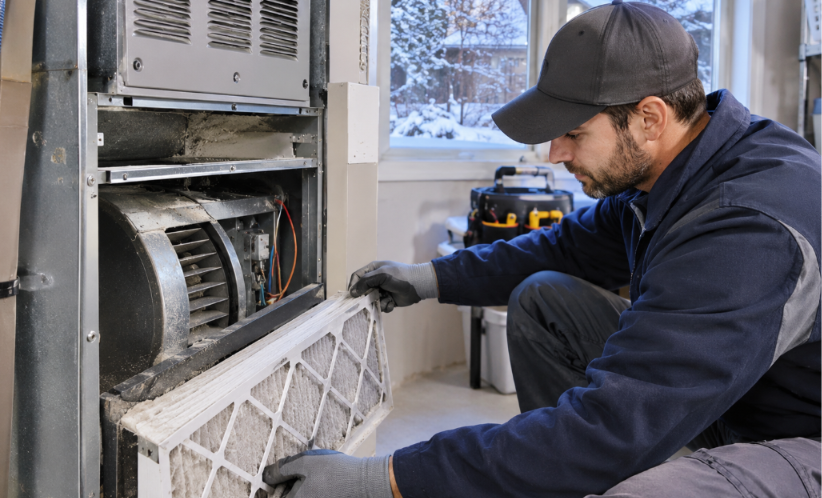
The difference comes down to which components are actually cleaned and whether the technician can show you the results. A quick wipe-down may cover visible cabinet surfaces and filter replacement while leaving dust on the blower and other internal components. A thorough cleaning addresses the buildup affecting your system.
| Component or Check | Quick Wipe-Down | Thorough Cleaning | Why It Matters |
|---|---|---|---|
| Blower wheel | Left in place without cleaning | Accessed and cleaned when buildup warrants it | Dust on the blades can restrict airflow |
| Evidence of work | Verbal confirmation only | Before-and-after photos or inspection images | Helps verify which components were cleaned |
| Time on site | Very short visit | Enough time for inspection, access, and cleaning | Internal components may require disassembly |
| Airflow check | Not performed | System operation and temperature rise checked | Helps identify remaining airflow problems |
Choosing the Right Furnace Cleaning Contractor
Before hiring a contractor, ask which components are included in the cleaning, whether the blower assembly will be accessed, and how the technician documents the work. Ask whether the price includes inspection and post-cleaning testing or whether those services cost extra. A clear scope of work helps you compare estimates without relying on the lowest price alone.
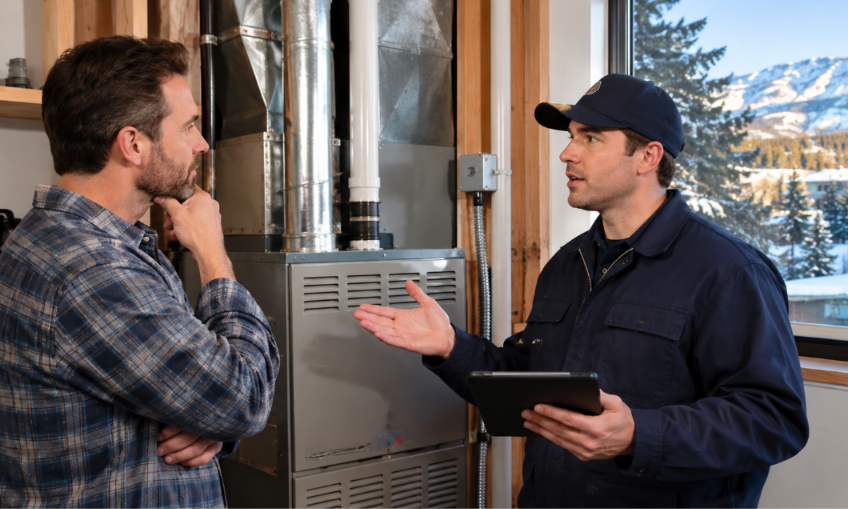
Ask the technician to show you the cleaned components or provide before-and-after photographs. If the blower or coil was heavily soiled, inspection images can help demonstrate what was removed. A reputable contractor should also explain any components that could not be accessed or cleaned during the visit.
How Much Does Furnace Cleaning Cost in Northglenn?
Across the Denver metro, a standard furnace cleaning typically runs about $100 to $250. Heavily contaminated systems cost more, especially when the blower has to come out and be taken apart. At Fresh Air First, the exact price comes from a free in-home inspection. A technician looks inside the furnace, photographs what is there, and quotes the price before any work starts.
Why Choose Fresh Air First for Furnace Cleaning in Northglenn?
If your furnace has not been cleaned in a while, or the heat still smells dusty long after the first few cycles, a free in-home inspection shows where the buildup is. Fresh Air First is based in Northglenn and serves the Denver metro. Our technicians use source-removal methods on the blower and cabinet. On heavily contaminated systems, they remove the blower motor and take it apart so each piece gets cleaned. You get before-and-after photos of the work, which is part of why customers rate us 4.9 stars across hundreds of Google reviews.
Furnace cleaning can also benefit the cooling equipment that shares the same blower and indoor coil. If your home needs attention beyond the furnace cabinet, our air duct cleaning services in Northglenn can address dust and debris inside the ductwork. Not sure which one you need? Our guide to duct cleaning vs. furnace cleaning explains the difference, and our furnace maintenance service covers a full heating checkup.
If you want to find out whether your furnace needs cleaning, call (720) 740-0836 or contact Fresh Air First to book your free in-home inspection.
Frequently Asked Questions
Will Furnace Cleaning Get Rid of the Dust Coming From My Vents?
It can help when dust buildup inside the furnace or on the blower is contributing to the problem. However, dust coming from supply vents can also originate in dirty ductwork, a poorly fitted filter, or gaps in the return-air system. If the ducts are holding accumulated debris, consider professional air duct cleaning alongside the furnace inspection.
Should the Heat Exchanger Be Cleaned or Replaced?
The heat exchanger should be inspected for corrosion, cracks, and other visible damage during appropriate furnace service. Cleaning may remove surface debris, but it cannot repair damaged metal. If a technician finds a crack or structural defect, the next step is to evaluate the equipment and discuss the appropriate repair or replacement options.
Why Does My Furnace Still Smell Dusty After Cleaning?
A dusty smell can return if debris remains inside the ductwork, on the evaporator coil, or in areas that were not included in the original cleaning. Dust burning off accessible furnace surfaces during the first heating cycles can also cause a temporary odor. A persistent burning smell, electrical odor, or unusual fumes should not be ignored and warrants an inspection.
Can I Clean My Furnace Myself?
Some of it. Swapping the filter on schedule, wiping dust off the outside of the cabinet, and keeping storage boxes away from the unit are all safe jobs. The blower, burners, gas line, and wiring are not. Taking those apart without training can damage the furnace or create a carbon monoxide or fire risk, so leave the inside work to a technician.
What Should I Ask Before Paying for Furnace Cleaning?
Ask which components will be cleaned, whether blower removal is included when necessary, and whether the technician will provide before-and-after photographs. Also confirm whether the price includes inspection and post-cleaning operation checks. A written scope helps you understand exactly what work is being performed instead of paying for a service described only as a complete furnace cleaning.