Skip to content

Have Your Air Ducts Never Been Cleaned? Here’s What’s Probably Inside
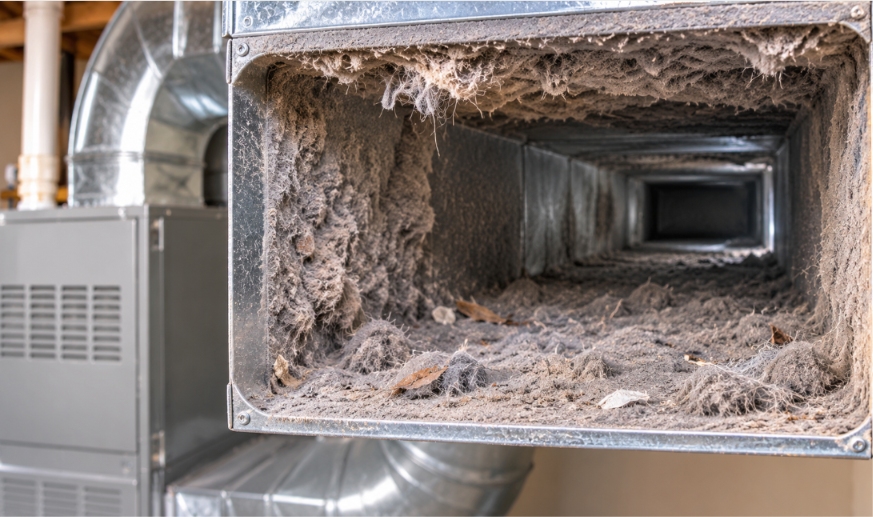
Years of household dust, pet hair, drywall grit from past projects, and sometimes pest droppings. That is what Fresh Air First technicians usually find in ducts that have never been cleaned. You can change the filter and dust the furniture every week, and the dust still comes back. That is because most of the buildup sits deep in the duct runs, where you cannot see it or reach it.
Air ducts can collect years of household dust, pet hair, dander, pollen, and construction residue. Some of this material settles deep inside the duct runs, while other buildup collects around the blower and accessible HVAC components. Cleaning only the vent openings does not remove debris from the entire system. A thorough cleaning requires equipment that loosens material from duct surfaces and captures it rather than pushing it into the living space.
Understanding what accumulates inside older duct systems, how professional source removal works, and what a proper cleaning should include can help you decide whether your home needs the service.
What’s Actually Inside Air Ducts That Have Never Been Cleaned?
Air ducts collect particles from the air moving through a home. Every time the heating or cooling system operates, air travels through the return ducts, passes through the equipment, and circulates back into the rooms. Filters capture some particles, but others can settle inside the ductwork or collect around HVAC components over time.
During first-time cleanings of older systems, technicians can encounter several types of accumulated material. The amount depends on the home’s age, occupancy, pets, renovation history, filter maintenance, and surrounding environment.
- Household dust and fibers: Dead skin cells, fabric fibers, and everyday dust can settle along duct walls and inside return-air pathways.
- Pet hair and dander: Homes with dogs or cats may have hair and dander collecting around return grilles and inside accessible duct sections.
- Pollen and outdoor particles: Particles brought indoors through doors, windows, clothing, and outdoor air can eventually enter the HVAC system.
- Construction debris: Drywall dust, sawdust, and other renovation residue may remain inside ductwork if the system was not protected during construction.
- Fine dirt and grit: Front Range wind pushes fine dust through doors, windows, and small gaps. It settles in duct runs, especially around bends and low sections.
- Pest droppings and nesting material: Mice and insects can get into ducts through gaps in attics, crawl spaces, and uncovered returns.
- Moisture and microbial growth: Condensation or an old leak can leave damp spots where mold or mildew starts to grow.
- Lost items: Toys, pens, and other small objects often end up behind floor registers.
- Buildup on HVAC components: Dust can accumulate on the blower wheel and other accessible components, depending on the system’s condition and maintenance history.
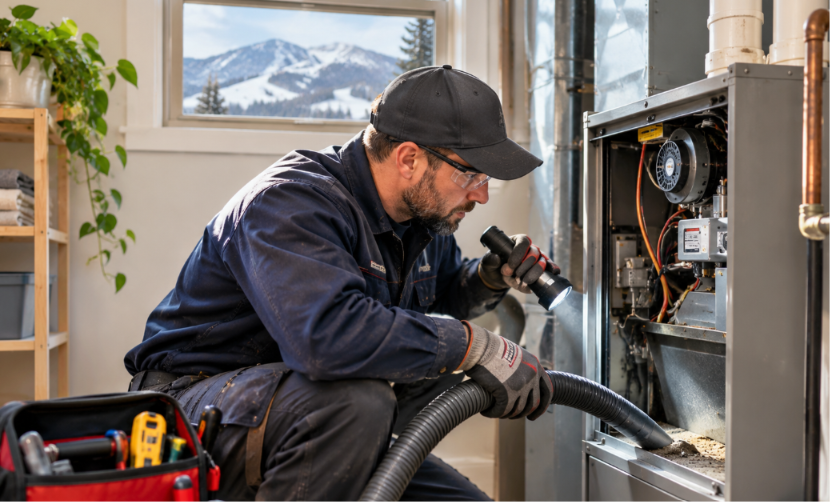
A first-time cleaning can reveal more than a thin layer of dust around the registers. Fresh Air First regularly sees systems so heavily contaminated that the blower motor has to be removed and taken apart to clean each piece. Every inspection is photographed, so you see the buildup before any price is quoted.
If you spot droppings near a vent or return, do not vacuum or sweep them. In Colorado, deer mice can carry hantavirus, and stirring up dried droppings can put it in the air. Leave that cleanup to a professional with proper containment.
Why Doesn’t Vacuuming the Vents Actually Clean the Ducts?
A vacuum attachment can remove loose dust near a register, but it cannot reach every section of a typical duct system. Supply and return ducts often extend through walls, floors, ceilings, and attic spaces. Debris may be sitting several feet beyond the opening or collecting around bends where a vacuum hose cannot reach.
There is also a difference between removing loose particles and dislodging material that has settled onto duct surfaces. A quick vacuum pass may make the visible opening look cleaner while leaving much of the buildup untouched.
A good HVAC filter helps capture airborne particles as air passes through it. However, changing the filter does not remove dust that has already settled inside the ductwork. It also does not automatically clean the blower wheel or other components that may have accumulated debris.
The method matters because effective duct cleaning involves both agitation and collection. Material needs to be loosened from the duct surfaces and drawn into appropriate collection equipment. Without those steps, a surface-level vacuuming may leave much of the original buildup behind.
What Does a Professional Air Duct Cleaning Involve?
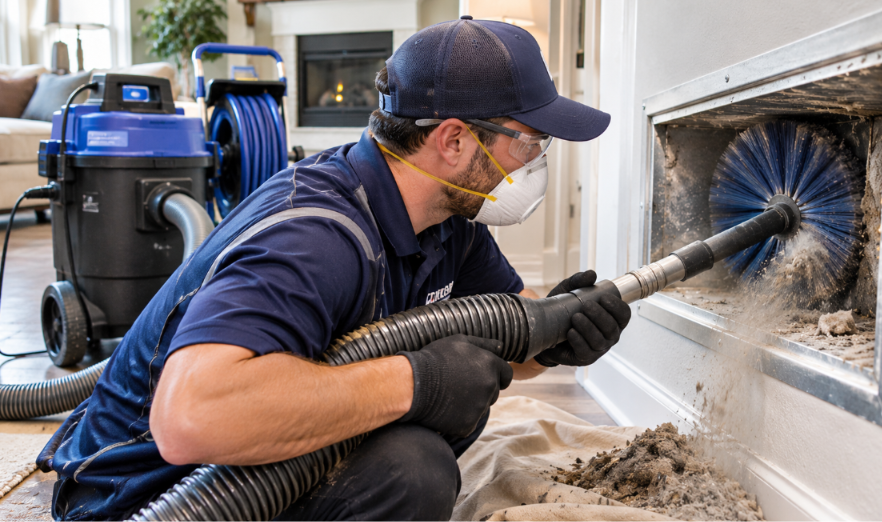
A thorough duct cleaning is a process involving inspection, containment, agitation, and debris removal. The equipment and approach should be appropriate for the duct material, system layout, and condition. Understanding the main steps helps homeowners recognize the difference between cleaning the visible registers and addressing the wider duct network.
Inspecting the Ductwork Before Cleaning
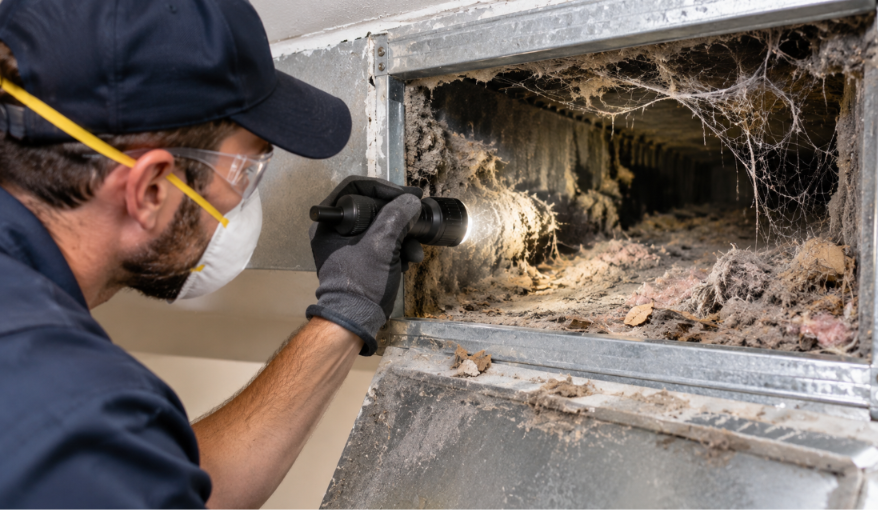
The first step is examining accessible sections of the duct system to understand its condition. A technician should look for visible debris, identify the duct material, check access points, and note any damage or unusual conditions. This inspection helps determine which cleaning methods are appropriate and whether additional concerns need attention.
Setting Up HEPA Negative-Air Equipment
A negative-air machine connects to the duct system and creates suction that draws loosened debris toward a collection unit. HEPA filtration helps capture fine particles rather than allowing them to circulate back into the home. Proper containment is important because disturbing settled dust without controlling its movement can spread it into living spaces.
Using Rotary Brushes to Loosen Debris
Suction can collect loose particles, but some buildup may cling to the interior duct surfaces. Rotary brushes help agitate and release this material so the negative-air equipment can capture it. The brush type and pressure should match the duct material, since unsuitable cleaning tools can damage flexible duct liners or other components.
Cleaning Return Ducts and Accessible Components
Return ducts carry air back toward the HVAC equipment and can collect dust and debris over time. The blower assembly may also need attention if inspection reveals buildup on its accessible surfaces. The evaporator coil is a separate component that needs its own evaluation. If the coil is dirty too, air conditioner coil cleaning can be quoted alongside the duct work.
Sanitizing When the Condition Requires It
Sanitizing is not automatically necessary for every duct system. It may be considered when an inspection identifies a specific odor or microbial concern that makes an appropriate treatment useful. The technician should explain why it is recommended, which surfaces will be treated, and what product will be used before adding duct disinfection to the cleaning scope.
What Are the Signs Your Air Ducts May Need Cleaning?
Some signs can help you decide whether your ductwork deserves a closer look. You can inspect an accessible register with a flashlight and check the return grille for visible dust or debris. However, what you see near an opening does not necessarily represent the condition of every duct run.
| What you notice | What it may indicate |
|---|---|
| Visible dust or debris inside registers | Material has accumulated near the duct openings |
| Dust collecting quickly on furniture | Several possible sources, including household activity, filtration, and duct debris |
| Pet hair around return grilles | Hair and dander may be collecting near the return-air pathway |
| Visible buildup inside accessible duct sections | The system may need a closer inspection |
| Musty or unusual odors when the HVAC starts | Possible debris, moisture, or another source that needs investigation |
| Recent remodeling or construction | Dust and renovation residue may have entered the ductwork |
These signs do not automatically prove that professional cleaning is necessary. Recurring dust can also come from pets, carpeting, open windows, inadequate filtration, or gaps in the home’s building envelope. Musty odors may point to a moisture problem that cleaning alone will not resolve.
If you notice several signs together, an inspection can help determine whether debris inside the ductwork is contributing to the problem.
Why Do Before-and-After Photos Matter?
Most residential ductwork is hidden behind walls, ceilings, floors, and other building materials. Once a cleaning is finished, homeowners cannot easily see what happened throughout the system. Before-and-after photos provide a practical way to document the condition of accessible areas and show the difference made by the cleaning.
Photos Show the Original Condition
Photos taken before work begins can help identify visible dust, debris, and buildup inside accessible sections. They also give homeowners a record of the conditions that led to the recommended service. This is more useful than relying on a general statement that the ducts look dirty.
After Photos Help Document the Work
Photos taken after cleaning can show the condition of the same accessible areas. They help homeowners review what was addressed and compare the results with the original condition. Ask which sections were photographed, since clean-looking registers alone do not demonstrate that the entire duct system was cleaned.
How Much Does Air Duct Cleaning Cost in Northglenn, CO?
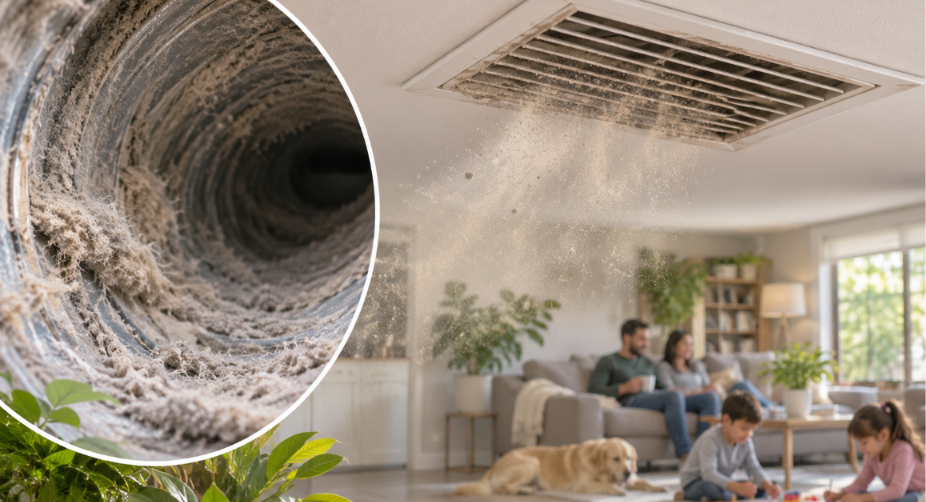
At Fresh Air First, general air duct cleaning starts at $199 for qualifying systems. Ducts that have gone years without cleaning often need a deeper clean. That price depends on the number of supply and return vents, the system’s condition, how easy the ducts are to reach, and how much buildup is inside.
The first step is a free in-home inspection. A technician looks inside, photographs what is there, and gives you the exact price before any work starts. For a full breakdown of what drives the price, read our air duct cleaning cost guide for Colorado.
Before comparing estimates, make sure you understand what each contractor includes in the service. A lower quote may cover only the accessible vents, while a more complete cleaning may include the full supply and return ductwork, HEPA negative-air equipment, rotary brush agitation, and before-and-after documentation.
How Often Should Air Ducts Be Cleaned?
There is no single cleaning schedule that applies to every household. The frequency depends on how quickly debris accumulates, the number of people and pets in the home, filter maintenance, renovation activity, and the overall condition of the HVAC system.
NADCA, the duct cleaning trade association, often cites every three to five years as a general guide, but that should not be treated as a mandatory interval for every property. A home with recent construction or unusual contamination may need attention sooner, while a well-maintained system with little visible buildup may not require frequent cleaning.
Consider arranging an inspection sooner if:
- Your home has recently undergone remodeling or construction.
- You have moved into an older property with no known cleaning history.
- You notice visible debris inside accessible duct sections.
- Your household has pets and significant hair or dander collects around return openings.
- A moisture, pest, or contamination issue has affected the ductwork.
Regular filter replacement and HVAC maintenance remain important between cleanings. They help the system operate as intended and reduce the amount of debris that can enter or accumulate inside the equipment.
Can Air Duct Cleaning Improve Indoor Air Quality?
Cleaning removes accumulated dust and debris from the ductwork, which may reduce one potential source of particles inside the HVAC system. However, it is important to understand that ducts are not the only source of indoor dust or air quality concerns.
Particles can also enter from outside, pets, cooking, carpets, cleaning products, and everyday household activities. Moisture problems, inadequate ventilation, and unsuitable filtration can create separate issues that duct cleaning will not correct.
If dust, odors, or other indoor air concerns continue after cleaning, the next step is to identify their source. An indoor air quality test in Northglenn can help investigate specific concerns and determine whether filtration, ventilation, moisture control, or another solution may be appropriate.
Duct cleaning should be considered one part of maintaining an HVAC system, not a guaranteed solution for allergies, respiratory symptoms, or every indoor air quality problem.
Why Choose Fresh Air First for Residential Air Duct Cleaning in Northglenn?
After years without cleaning, your ductwork may be holding far more than the light layer of dust you can see around the vents. The real buildup is often deeper inside the system, where a quick vacuum cannot reach. Fresh Air First approaches residential duct cleaning with HEPA negative-air equipment and rotary brushes to loosen and remove debris from the ductwork, rather than simply cleaning the visible openings.
You should also be able to see what you’re paying for. Before-and-after photos help show the condition of accessible duct sections and what changed after the cleaning. That transparency is a big part of why Fresh Air First holds a 4.9-star rating across hundreds of Google reviews. Every home has a different duct layout and level of buildup, so the service starts with a free inspection. Residential duct cleaning starts at $199 for qualifying systems, and you’ll receive the exact price after the inspection, before deciding how to proceed.
If your ducts have never been cleaned, don’t leave it to guesswork. Take a closer look at the residential duct cleaning process and the duct system inspection service, or call Fresh Air First at (720) 740-0836 to arrange your free inspection.
Frequently Asked Questions
Can I Clean My Air Ducts Myself With a Shop Vacuum?
A shop vacuum can remove loose dust near an accessible register, but it cannot effectively clean an entire duct network. Most ductwork extends behind walls, under floors, and through attic spaces. Professional source removal uses equipment to loosen debris inside the runs while collecting it under controlled suction.
How Long Does Professional Air Duct Cleaning Take?
The time depends on the home’s size, number of duct runs, accessibility, and amount of debris. A technician should inspect the system before providing a realistic estimate. A larger home or a system with difficult access may require more time than a smaller, straightforward layout.
Does Air Duct Cleaning Include the Furnace and Evaporator Coil?
Not necessarily. Duct cleaning covers the supply and return ductwork. The furnace blower and the evaporator coil are usually cleaned as separate services. Fresh Air First offers furnace cleaning and air conditioner coil cleaning, and the free inspection shows which parts actually need attention, so you only pay for the work your system needs.
Should I Replace My HVAC Filter After Duct Cleaning?
Installing a clean filter after service is a sensible step, provided it is the correct size and type for your system. Continue replacing it according to the manufacturer’s recommendations and household conditions. A properly maintained filter helps capture airborne particles before they accumulate inside the equipment and ductwork.
How Much Does Air Duct Cleaning Cost?
The price depends on the home’s duct layout, size, accessibility, and cleaning requirements. Residential air duct cleaning starts at $199 for qualifying systems, with the exact price determined after a free inspection. Ask for a clear explanation of the work included before approving the service.