Skip to content
If your HVAC system turns on and you notice a musty smell coming from the vents, you might wonder whether mold is growing inside your air ducts. Small clues like dark specks on vent covers, condensation around duct joints, or unusual residue when wiping a register can raise concern. Because ductwork is hidden behind walls and ceilings, it’s not always easy to tell what’s really happening inside the system. In this guide, we’ll explain the signs to watch for and how professionals confirm whether mold is actually present.
Why Mold Can Develop Inside Air Ducts in Colorado Homes

Although Colorado’s climate is generally dry, the Denver metro’s seasonal swings create perfect moments for moisture to linger inside ductwork and fuel mold growth. When spring snow melts, and late-summer storms roll through Northglenn, Thornton, and Westminster, humid air meets cool supply ducts and creates condensation. If insulation is thin or ducts run through garages, crawlspaces, or attics, temperature swings intensify moisture. Dust, dander, and drywall particles then act as food, accelerating Mold Growth on damp surfaces. Add a restrictive filter, low airflow, or a leaky return pulling moist air, and spores can settle and spread.
Common conditions that allow mold growth inside duct systems include:
- Condensation forms on cool supply ducts during humid weather.
- Restricted airflow caused by dirty HVAC filters.
- Humidifiers are set too high during winter heating cycles.
- Clogged condensate drain pans near the air handler.
- Leaky return ducts pull humid air from crawlspaces or garages.
You’ll also see risk when an air conditioner short-cycles, a humidifier is set too high, or the drain pan clogs—each invites persistent moisture inside the system.
Common Signs That Mold May Be Growing in Your Air Duct System
When your HVAC kicks on, and you catch a damp, earthy odor from the vents, that’s one of the most Common Signs mold may be active in your ductwork. You might also see dark specks or rings on supply registers and nearby drywall, especially after a cold Northglenn night followed by a sunny afternoon. If your family’s coughing, sneezing, or congestion worsens when the system runs, spores could be circulating. Watch the air handler: pooled condensate, rust, or sweating lines suggest moisture driving growth.
Homeowners in Northglenn, Thornton, and Westminster often notice a few early warning signs before mold is confirmed inside the duct system:
- Persistent musty smell coming from vents whenever the HVAC turns on
- Dark spotting or ring stains forming around supply registers
- Visible moisture or condensation around duct joints or the air handler
- Dust buildup that returns quickly after cleaning vents or surfaces
- Allergy symptoms worsen indoors when the heating or cooling system runs
Dust that returns a day after cleaning—often gray and clumpy—can indicate mold-laden debris moving through ducts. In Thornton and Westminster homes with fluctuating humidity or poorly insulated trunks, these patterns typically point to mold and warrant prompt inspection.
Simple DIY Checks Homeowners Can Do to Look for Mold

Before scheduling a professional inspection, homeowners can perform a few simple visual and odor checks to identify possible mold concerns inside the HVAC system. While these checks cannot confirm mold growth, they can reveal conditions that often allow mold or microbial buildup to develop inside ductwork.
- Check vent openings for dark spotting — unusual black or greenish specks around supply registers may indicate contamination.
- Inspect exposed duct sections — look for condensation, sweating metal, or damp insulation around ducts.
- Examine the evaporator coil and drain pan — standing water or slime buildup can signal moisture problems.
- Notice odors when the HVAC starts — a persistent musty smell during system startup can suggest mold activity.
- Look inside the air handler cabinet — heavy dust mats or damp debris can create conditions for microbial growth.
These quick checks help homeowners identify potential warning signs, but visible dust or staining alone does not confirm mold inside air ducts. Because duct systems run behind walls and ceilings, confirming mold usually requires a professional inspection using specialized tools to see deeper inside the HVAC system.
Why Mold in Ductwork Is Difficult to Confirm Without Inspection
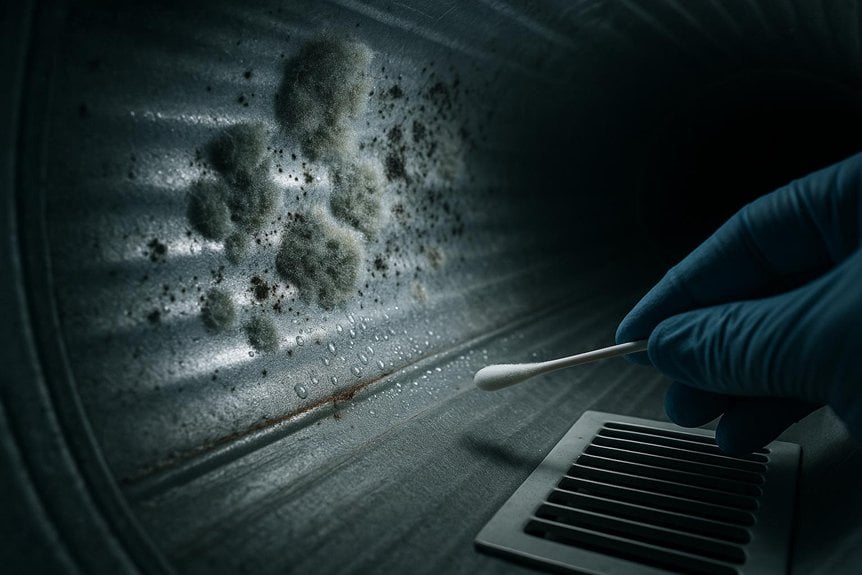
Because most duct surfaces are hidden behind walls, floors, and insulation, you can’t reliably confirm mold without a targeted inspection. What you smell at a vent or see at a register doesn’t reflect what’s happening deep in trunks, branches, and plenums. Dust, soot, or oxidized metal can mimic mold, and air currents move spores unpredictably. Condensation patterns in Northglenn and the Denver metro vary by season and insulation quality, so one access point rarely tells the whole story. Confirming growth requires seeing surface texture and spread, not just color.
Professionals resolve this without the Invasive Nature of guesswork: they use duct cameras to view interiors, measure moisture, and sample residues. That evidence guides safe cleaning, filtration, and, when warranted, antimicrobial treatment.
Health Symptoms That May Be Linked to Mold in HVAC Systems

While symptoms vary by person and season, many homeowners begin to notice patterns that point to mold exposure when the HVAC system runs. In Northglenn and across the Denver metro, seasonal humidity changes and moisture inside ductwork can allow mold spores to circulate through the home’s ventilation system. These particles can sometimes trigger respiratory irritation or allergy-like reactions when airflow distributes them throughout living spaces.
Homeowners commonly report symptoms such as:
- Persistent coughing or throat irritation appears when the HVAC system starts running.
- Sneezing or nasal congestion that worsens in rooms with active airflow from vents.
- Itchy or watery eyes during heating or cooling cycles.
- Recurring sinus pressure or headaches that improve when leaving the house.
- Asthma flare-ups or breathing discomfort in individuals sensitive to airborne irritants.
People with allergies, asthma, or weakened immune systems often notice these reactions first. Tracking when symptoms begin, which rooms trigger them, and whether odors accompany airflow can provide helpful clues when investigating possible mold inside duct systems.
However, health symptoms alone cannot confirm mold growth inside HVAC ducts. Because many of these reactions can also be caused by dust, pollen, or other airborne particles, a professional inspection is usually required to determine whether mold is actually present inside the system.
How Professional Technicians Inspect Air Ducts for Mold
If symptoms, odors, or visible clues continue to raise concerns, the next step is a professional duct inspection. In Northglenn and throughout the Denver metro area, trained technicians begin by evaluating the HVAC system for moisture conditions that allow mold to develop. Inspections focus on areas where condensation, debris buildup, or airflow problems may be present.
During a professional inspection, technicians typically:
- Use duct inspection cameras to examine interior duct surfaces for discoloration or residue.
- Measure humidity and moisture levels around the air handler and duct connections.
- Inspect evaporator coils and drain pans where condensation can accumulate.
- Check duct insulation and liners for moisture damage or contamination.
- Document any suspicious buildup with photos before recommending cleaning or remediation.
These inspection methods help determine whether the issue involves mold growth, normal dust buildup, or moisture-related contamination inside the duct system. Once contamination is confirmed, contractors can move forward with safe cleaning procedures designed to remove debris and prevent spores from spreading through the HVAC system.
How Contractors Remove Mold and Clean the Duct System Safely
Once suspected mold growth is confirmed inside the HVAC system, professional technicians follow controlled procedures to prevent spores from spreading throughout the home. The process begins by establishing containment and negative air pressure, which isolates the affected duct sections while specialized HEPA-filtered vacuum equipment captures debris and airborne particles during cleaning.
A professional duct mold cleaning process typically includes:
- Containment Setup — Barriers are installed to prevent mold spores from spreading into living spaces during cleaning.
- Negative Air Pressure — HEPA-filtered vacuum systems create controlled suction inside the duct system.
- Debris Agitation — Rotary brushes and compressed-air tools loosen contamination inside duct surfaces.
- HVAC Component Cleaning — Registers, boots, and blower compartments are cleaned to remove accumulated debris.
- Antimicrobial Treatment — EPA-registered products may be applied when recommended under NADCA cleaning guidelines.
Technicians also inspect duct materials to determine whether contaminated insulation or duct liners must be removed and replaced. Because proper containment, equipment, and moisture control are critical, homeowners should always choose an experienced mold remediation and duct cleaning company that follows professional HVAC cleaning standards.
Why Choose Fresh Air First in Northglenn, CO

When homeowners suspect mold inside their air ducts, the most important step is getting an accurate inspection before taking action. At Fresh Air First, our team works with homeowners across Northglenn and the Denver metro area to identify potential HVAC mold contamination, moisture issues, and airflow problems that can affect indoor air quality. Because mold concerns are often confused with normal dust buildup or debris, our technicians focus on careful system evaluations to determine whether microbial growth is actually present.
If mold is suspected, our team can perform professional mold inspection and remediation services and recommend proper cleaning solutions for the HVAC system. We also offer indoor air quality testing to help homeowners understand what may be circulating through their ventilation system. By identifying moisture sources and confirming contamination before treatment, we help homeowners make informed decisions about restoring healthier air inside their homes.