Skip to content
When you think about air duct cleaning, you might wonder how long it actually takes and what happens during the process. In most homes, the job takes two to four hours, but several factors can affect the timeline. Understanding what technicians inspect, how equipment is used, and what happens inside your duct system helps homeowners know exactly what to expect from a professional cleaning service.
How Long Does Air Duct Cleaning Usually Take in a Typical Home?
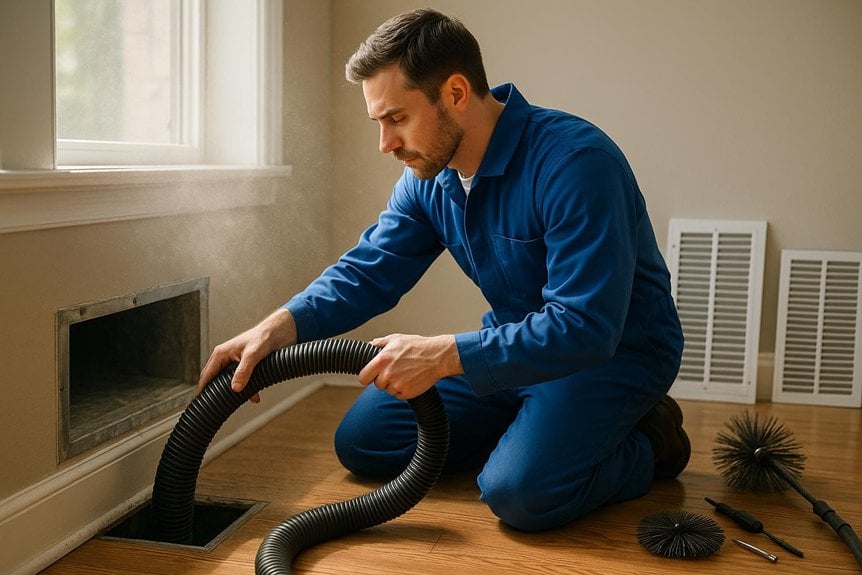
How long does it actually take to clean your air ducts? Typically, you can expect a professional air duct cleaning service to take between two to four hours for a standard-sized home. Time estimates can vary based on several factors. If your home is larger or has a complex duct system layout, the process might take longer. Additionally, if there’s significant dust buildup or pet hair accumulation, these can extend the cleaning time. Homes around Northglenn, with long winters and frequent furnace use, often require thorough cleaning. It’s essential to have a professional assess your specific situation to provide a more accurate estimate. Remember, a thorough job ensures better indoor air quality and efficient HVAC performance in the long run.
What Technicians Inspect Before the Air Duct Cleaning Process Begins

Before the air duct cleaning process kicks off, technicians conduct a thorough inspection to understand your home’s specific needs. They follow a detailed inspection checklist to ensure nothing’s overlooked. First, they assess the furnace blower compartment and air handler components for dust accumulation or mechanical issues. Next, they’ll examine both return and supply duct lines to check for blockages or excessive dust buildup.
Technicians typically inspect several areas before cleaning begins:
- Blower Compartment — Checks dust buildup around the furnace blower and motor assembly.
- Supply Duct Lines — Identifies debris buildup restricting airflow through the main ducts.
- Return Duct System — Examines areas where dust and allergens are commonly pulled in.
- Registers and Vents — Looks for visible obstructions affecting room airflow distribution.
- Air Filter Housing — Evaluates filter condition and airflow restriction issues
In addition to these areas, technicians also look for obstructions that could restrict airflow throughout the duct system. If applicable, dryer vents may be inspected for lint buildup that can create a potential fire hazard if left unaddressed. This careful evaluation allows the cleaning approach to be tailored specifically to your home’s duct layout and overall system condition.
By completing this initial assessment, technicians ensure the cleaning process is efficient, thorough, and focused on the areas that require the most attention. Once the equipment is fully set up and connected, technicians then begin the detailed cleaning process inside the duct system.
How Professional Equipment Is Used to Clean Your Air Duct System

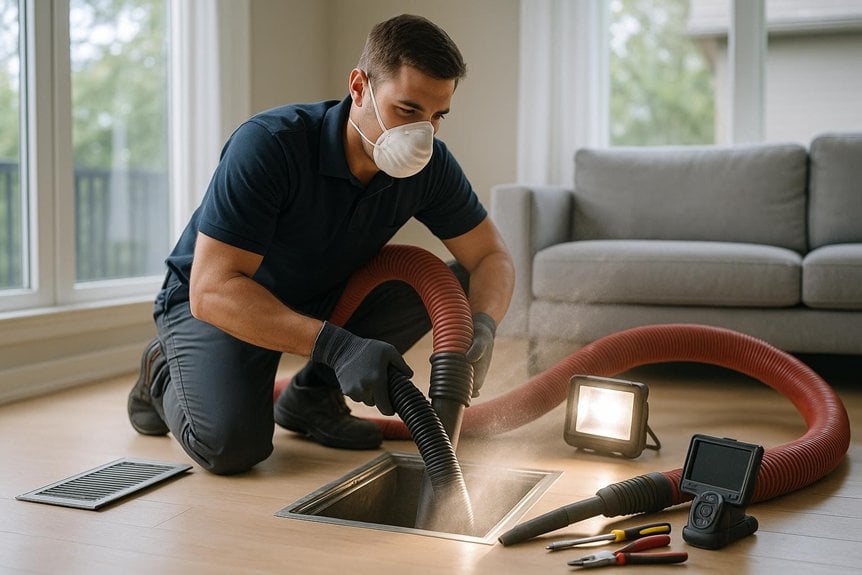
To thoroughly clean your air duct system, technicians rely on professional-grade equipment designed for efficiency and effectiveness. These tools allow technicians to reach deep into duct lines and remove contaminants that ordinary household tools cannot. Professional air duct cleaning procedures often follow standards recommended by the National Air Duct Cleaners Association (NADCA), which outlines proper equipment use and safe cleaning methods.
Technicians rely on specialized equipment designed for deep HVAC cleaning:
- Negative Air Vacuum Systems — Creates strong suction to remove dust and debris from ducts.
- Rotary Brush Tools — Loosens stuck contaminants along interior duct surfaces.
- Compressed Air Whips — Breaks apart compacted dust inside tight duct sections.
- Inspection Cameras — Helps technicians verify cleanliness inside hidden duct areas.
- HEPA Filtration Units — Captures fine particles to prevent contamination during cleaning.
Equipment efficiency is crucial, as it minimizes cleaning time while maximizing results. By using advanced technology, technicians can navigate complex layouts typical in Colorado homes, dealing with dust buildup and pet hair effortlessly. This professional equipment ensures your air duct system operates at peak efficiency, improving your home’s air quality.
What Actually Happens Inside Your Ductwork During Cleaning
Equipped with professional tools, our technicians tackle the intricate task of cleaning your ductwork, bringing noticeable improvements to your home’s air quality. First, they thoroughly inspect for ductwork contamination, looking for dust, debris, and allergens lurking within. As they clean, specialized brushes and vacuums dislodge and remove contaminants, ensuring the air flowing through your ducts is fresh and clean.
Typical steps during duct cleaning include:
- Debris Agitation — Brushes and air tools loosen dirt attached to duct surfaces.
- Vacuum Extraction — High-powered vacuums remove contaminants from the duct system.
- Register Cleaning — Each vent cover is cleaned to prevent dust recirculation.
- Main Trunk Cleaning — Large central ducts are cleared of heavy debris buildup.
- Final Airflow Check — Technicians verify improved airflow after cleaning is complete.
Technicians carefully handle each part of your system, from the main supply and return lines to the smallest registers. They pay close attention to areas where buildup is common, such as bends and corners. Throughout the process, you’ll notice a significant reduction in dust accumulation around your home, leading to a healthier living environment and improved HVAC efficiency.
Why Some Homes Take Longer to Clean Than Others
Although air duct cleaning might seem straightforward, several factors can cause the process to take longer in some homes than others. The design of your duct system is a significant influence. Complex layouts with multiple turns and branches can extend cleaning time. Here’s why some homes might take more time:
- Duct Design — Systems with multiple bends, branches, or long duct runs require more detailed cleaning.
- Home Size — Larger homes naturally take longer because the HVAC system includes more duct lines and vents.
- Dust and Debris — Heavy buildup from dust, pet hair, or construction particles requires deeper cleaning.
- Number of Vents — Homes with many supply and return vents require technicians to access and clean more registers.
- System Accessibility — Tight crawlspaces, attic ducts, or difficult access points can extend cleaning time.
In Northglenn and the surrounding Denver metro area, these factors are common due to varied home designs and HVAC system layouts. Understanding these conditions helps homeowners set realistic expectations for how long a professional duct cleaning service may take.
What Parts of the HVAC System Are Cleaned During the Service
When you schedule an air duct cleaning service, technicians focus on several critical components inside your HVAC system where dust and debris commonly accumulate. Cleaning these areas helps restore proper airflow, reduce dust circulation, and improve overall indoor air quality throughout your home.
A complete air duct cleaning service typically includes the following system components:
- Supply air ducts carry conditioned air from the HVAC system into each room and are cleared of accumulated dust and debris.
- Return air ducts pull indoor air back into the system for filtration and often collect the highest concentration of contaminants.
- Blower assembly components are cleaned to remove dust buildup that can restrict airflow and reduce system efficiency.
- Air handler cabinet interiors are inspected and cleaned where debris commonly settles around mechanical components.
- Vent registers and grilles are removed and cleaned to prevent dust from circulating back into living spaces.
Additionally, air handler components are inspected to remove any buildup that might hinder system efficiency. If relevant, dryer vents are also addressed to prevent fire hazards. By cleaning these critical parts, you reduce dust circulation and improve indoor air quality, vital for homes in the Denver metro area with heavy seasonal HVAC usage.
What Homeowners Should Expect While the Cleaning Is Happening
As the air duct cleaning process begins, you’ll notice the technicians moving purposefully through your home, equipped with specialized tools and a clear plan. They’ll focus on cleaning each component efficiently, ensuring minimal disruption.
Expect the following during the cleaning:
- Technicians will use powerful vacuum equipment, which may create noticeable noise while debris is removed from the ducts.
- Crew members will need access to different rooms so they can reach the supply and return vents throughout the home.
- Some vent covers may be temporarily removed to allow proper access to the interior duct system.
- The cleaning process typically takes two to four hours, depending on the size of the home and the duct layout complexity.
Throughout the process, technicians will communicate with you and keep you informed about the cleaning progress. By the end of the service, you should notice a cleaner, healthier air system with improved airflow and reduced dust circulation. Choosing a qualified duct cleaning contractor ensures the work is performed using proper equipment and industry standards, helping your HVAC system operate more efficiently while protecting your home’s indoor air quality.
Why Choose Fresh Air First in Northglenn, CO for Professional Air Duct Cleaning

Choosing Fresh Air First for your professional air duct cleaning in Northglenn, CO, means working with an experienced duct cleaning contractor that understands how Colorado homes accumulate dust, allergens, and debris throughout long heating seasons. With 7+ years of hands-on experience, our team uses professional-grade equipment to perform detailed system cleaning that improves indoor air quality and HVAC efficiency.
Whether you’re dealing with excessive dust buildup or want to improve airflow throughout your home, our technicians provide thorough and reliable service tailored to your duct system. Schedule a professional air duct cleaning service with Fresh Air First to restore cleaner air, better airflow, and healthier comfort throughout your home.